Phase 1: Preparation
Before starting the Scorch Protocol, you must get your body ready. Think of this as “turning on the lights” before the deep work begins. Preparation means testing your baseline health, fixing major deficiencies, and then choosing one of two roads into the fast: a plant-based path that heals deeper, or a ketogenic path that is safer and far more forgiving. This page walks you through both.
Are You Ready to Start?
Step 1: Baseline Testing
You cannot fix what you cannot measure. Get these tests done before starting:
| Test | Why It Matters |
|---|---|
| Thyroid Panel | TSH, Free T3, Free T4. A low T3 or high TSH means your metabolism is suppressed, a key target of the protocol. |
| Complete Blood Count (CBC) | Checks for anemia, infection, and immune system status. Low white blood cells or hemoglobin can make fasting risky. |
| Metabolic Panel | Checks kidney and liver function. Your kidneys will be working hard during a dry fast, so they must be healthy. |
| Vitamin D & B12 | Severe deficiencies in these can cause fatigue, nerve damage, and immune failure. Fix these before fasting. |
| Ferritin / Iron | Low iron (anemia) causes fatigue and makes fasting much harder. Your body needs iron to transport oxygen during healing. |
| Morning Cortisol | Low cortisol (adrenal fatigue) is very common in chronic illness. It affects how well your body handles stress, including fasting. |
| Sex Hormones (Total & Free Testosterone, Estradiol, SHBG) | Your baseline before the rebuild. Years of low-carb fasting drive SHBG up, which can hide a low free testosterone under a normal-looking total. Estradiol goes on the same panel because you protect it, not crush it, when testosterone comes online later. Retest after carbs return. |
Step 2: Fix Critical Deficiencies
Based on your test results, address these common deficiencies. Do not start the fast with known, severe deficiencies, as your body will not respond well.
Priority Supplements Before Fasting
Step 3: Choose Your Preparation Path
There are two ways to prepare for the fast, and they are not equal. One gets you closer to fully healed. The other is safer and far more forgiving. The right choice depends on how sick you are, how many medications you are on, and how precisely you can follow a plan. Pick honestly.
Both paths begin the same way. Starting at least 3 weeks out, remove alcohol, caffeine, nicotine, and ultra-processed food completely. This clears the caffeine-withdrawal headache and the dopamine crash out of the way now, so they do not land on top of you during the fast itself. From there the two paths diverge.
Path 1: Plant-Based Preparation (The Gold Standard)
This is the stronger path. Done correctly, it gets you closest to fully healed, because it builds exactly the baseline a dry fast heals best from: a higher metabolic rate, higher T3, and a body primed so that the Day 3 acidotic shift hits with full force. That shift is the therapeutic event, and the larger your metabolic gap entering ketosis, the deeper it goes. It demands precision, so choose it only if you can follow the steps closely.
After cutting those inputs, the taper counts down to the fast. Day 0 is the day the dry fast begins:
- 2 weeks to 5 days out: Strict whole-food plant-based, with no added salt, oil, or sugar. Stripping these out sheds excess stored sodium so the fluid and blood-pressure swings of the first fasting days are gentler. This is about removing the excess, not depleting you. You bring electrolytes back up to a safe baseline on the rehydrate day below.
- The final week: Magnesium citrate at a higher dose, daily, with plenty of water (see Step 5). It keeps the bowel moving as the food gets lighter and lowers the kidney-stone risk going into a dry fast.
- 5 to 3 days out: Raw fruit, raw vegetables, and steamed vegetables only. No grains, beans, nuts, or heavy starches. This low-residue step is the real cleanse, clearing fiber out gently through food instead of through harsh laxatives.
- 2 to 1 days out: No oils, no meat, nothing hard to digest. Light plant food only, cooked soft where that helps. This is also where you bring electrolytes back up to a safe baseline before going in.
- The last day: Juice only, fresh fruit and vegetable juice with no pulp, so there is as little as possible left in the colon when the fast begins.
- Day 0: Begin the dry fast.
This path is also where medications come down, where appropriate. Two kinds of drugs matter most: ones that stress the kidneys or raise dehydration risk, which generally need to be off before a dry fast, and fat-soluble drugs that sit in your fat stores and re-enter the bloodstream as you burn fat, which are tapered over the weeks beforehand. This is selective, not a clean sweep. Anything load-bearing that is holding you together, like a Lyme protocol or an antifungal or antiviral you depend on, stays. Which specific drugs and what schedule is individual, and this is exactly what the membership is for: bring me your list and I work it out with you. Do not change prescriptions on your own.
Path 2: Ketogenic Preparation (The Safer Fallback)
This is the forgiving path. Eat 50 grams of carbohydrate a day or less for at least 1 to 2 months before the fast, with the same cleanse prep below. Keto-adapting first means your body is already burning fat when the fast begins, which makes the fast dramatically easier and safer and leaves a large margin for error. Because the fast itself is softened, the medication picture is usually less drastic too.
The trade-off is ceiling. A body that eased into ketosis meets a smaller Day 3 shock, so the healing is gentler than the plant-based path. This is a tolerance accommodation, not a depth multiplier. Choose it if you are seriously ill, on many medications, have failed fasts before, cannot follow the plant-based steps precisely, or simply want the largest safety margin for your first attempts.
Which Path Is Right for You?
What the evidence says: that exception, and the judgement of who needs T3 after the fast, are my clinical rules. The literature has no published criterion for who needs T3 after a fast; the nearest objective candidate is the low free T3 and high reverse T3 pattern measured in chronic fatigue patients (Ruiz-Nunez 2018), which is a blood test, not the history-and-temperature screen I use.
Step 4: Mental Preparation
Setting Your Intention
A contemplative or prayer practice helps many people settle into and hold this state once they reach it on day 3 or 4. If that appeals to you, the Mindfulness & Neurology page covers specific approaches that work well in the deep-fast window.
Step 5: The Cleanse and the Final Days
Eat Light, Flush Gently, Skip the Enemas
Going into the fast with an empty colon means your body is not dealing with rotting material in a sealed, waterless environment, which is extra toxin load at exactly the time you want nothing pulling your immune system the wrong way. But more is not better here. The Scorch Protocol focuses on eating light, not on overdoing the enemas and flushing, because that flushing is itself a big stressor on the body. Enemas, colonics, saltwater flushes and herbal colon cleanses irritate the bowel lining and strip out potassium right before a fast that already stresses your electrolytes. Enemas are not necessary in this protocol, and I do not use them. The plant-based taper (or the keto prep) does most of the work of emptying you out gently through food. Magnesium citrate finishes the job.
Magnesium citrate is the tool I keep, and I run it at a higher dose than a maintenance supplement, daily through the final week, rather than as one big purge. It keeps the bowel moving as the food gets lighter, and in my experience it minimises the chance of a kidney stone forming once you go dry. Once you are in the fast, autophagy and fat burning handle the real cellular clearance from the inside. There is nothing left to “flush.”
What the evidence says: the light days match what the German fasting clinics call a relief day, a vegetarian day under about 1,000 kcal before the fast (ÄGHE 2002; Wilhelmi de Toledo 2019). Citrate is a real stone inhibitor: in the pooled trials, recurrent stone formers on citrate salts formed markedly fewer new stones than on placebo (Phillips 2015), and five dry days doubled serum uric acid and concentrated the urine (Papagiannopoulos-Vatopaidinos 2020), which is where citrate helps. Marked caveat: those trials used modest daily doses for years, not a week of laxative doses; at laxative doses magnesium pulls water and electrolytes out of you right before a week without water, and magnesium toxicity is documented when the kidneys could not clear it (Khairi 2014; Bokhari 2018), so the week at a higher dose is my practice with no trial behind it. Skipping enemas sides with the gastroenterology evidence, which found no supporting trials and documented harm from colon cleansing (Acosta and Cash 2009), and against the tradition: every dry-fasting school empties the bowel once before the fast, by enema or laxative, though none uses enemas during the dry days (Khoroshilov 1994). On the liver flush, the “stones” people pass after an olive-oil flush were analysed and were soap made from the oil (Sies and Brooker 2005).
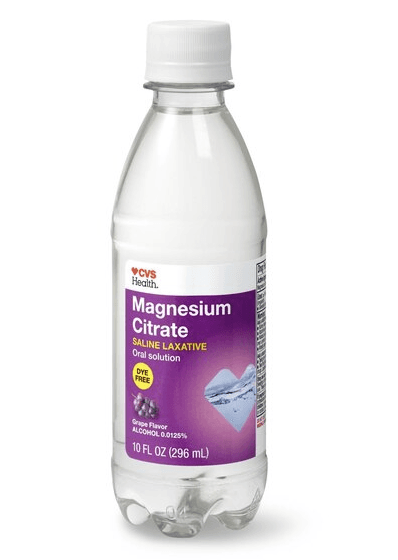
Standard magnesium citrate laxative, available at CVS and most pharmacies
Get your own customized refeed plan
Members build a personalized, day-by-day refeed plan: food choices and a calorie ramp sized to their own fast, plus when to layer in T3 and the rest of the protocol.
Build your refeed plan →Have a question about your own case?
Ask Yannick directly. Members send their labs, symptoms, and questions and get a personal, reviewed answer, plus help sourcing medication and the full synthesized protocol behind every reply.
Ask Yannick your question →References
- Ärztegesellschaft Heilfasten und Ernährung (ÄGHE). Leitlinien zur Fastentherapie. Forschende Komplementärmedizin und Klassische Naturheilkunde, 2002;9:189-198.the German fasting-therapy guideline: a vegetarian relief day under about 1,000 kcal before the fast; magnesium sulphate used as a laxative for its water-drawing effect
- Wilhelmi de Toledo F, Grundler F, Bergouignan A, Drinda S, Michalsen A. Safety, health improvement and well-being during a 4 to 21-day fasting period in an observational study including 1422 subjects. PLoS One, 2019;14(1):e0209353. PMID 30601864. DOI 10.1371/journal.pone.0209353.the Buchinger cohort used a 600 kcal vegetarian day before the fast and a laxative on the first morning of a fast that includes about three litres of fluid a day
- Phillips R, Hanchanale VS, Myatt A, Somani B, Nabi G, Biyani CS. Citrate salts for preventing and treating calcium containing kidney stones in adults. Cochrane Database Syst Rev, 2015;(10):CD010057. PMID 26439475. DOI 10.1002/14651858.CD010057.pub2.pooled trials of citrate salts in recurrent stone formers: markedly fewer new stones than placebo over one to four years at modest daily doses; upper gastrointestinal upset the commonest side effect
- Papagiannopoulos-Vatopaidinos IE, Papagiannopoulou M, Sideris V. Dry fasting physiology: responses to hypovolemia and hypertonicity. Complement Med Res, 2020;27(4):242-251. PMID 31958788. DOI 10.1159/000505201.five dry days in healthy adults doubled serum uric acid and concentrated the urine, the setting in which citrate is protective
- Khairi T, Amer S, Spitalewitz S, Sharon D, et al. Severe symptomatic hypermagnesemia associated with over-the-counter laxatives in a patient with renal failure and sigmoid volvulus. Case Rep Nephrol, 2014;2014:560746. PMID 24563801. DOI 10.1155/2014/560746.magnesium toxicity from over-the-counter magnesium laxatives when the kidneys could not clear it
- Bokhari SR, Siriki R, Teran FJ, Batuman V. Fatal hypermagnesemia due to laxative use. Am J Med Sci, 2018;355(4):390-395. PMID 29661354. DOI 10.1016/j.amjms.2017.08.013.a death from magnesium laxative use in a woman with normal kidney function, serum magnesium climbing within two days
- Acosta RD, Cash BD. Clinical effects of colonic cleansing for general health promotion: a systematic review. Am J Gastroenterol, 2009;104(11):2830-2836. PMID 19724266. DOI 10.1038/ajg.2009.494.no methodologically rigorous trials support colonic cleansing for health, multiple case series of harm; the gastroenterology basis for skipping enemas and colonics
- Khoroshilov IE. Clinical and hygienic aspects of absolute (dry) fasting. Author's abstract of a Candidate of Medical Sciences thesis, Military Medical Academy, St Petersburg, 1994 (abridged English translation, Siberika Publishing, 2020).the Russian dry-fasting method used a single siphon enema before the dry days and no enemas, baths or laxatives during them; the tradition empties the bowel first, which this protocol does through food and citrate instead
- Sies CW, Brooker J. Could these be gallstones? Lancet, 2005;365(9468):1388. PMID 15836886. DOI 10.1016/S0140-6736(05)66373-8.the 'stones' passed after an olive-oil and lemon-juice liver flush were analysed and were saponified fatty acids, not gallstones
- Ruiz-Nunez B, Tarasse R, Vogelaar EF, Janneke Dijck-Brouwer DA, Muskiet FAJ. Higher Prevalence of "Low T3 Syndrome" in Patients With Chronic Fatigue Syndrome: A Case-Control Study. Front Endocrinol (Lausanne), 2018;9:97. PMID 29615976. DOI 10.3389/fendo.2018.00097.the nearest thing to a published criterion for who might need T3 after a fast: chronic fatigue patients carried lower free T3 and total T3 and more reverse T3 than matched controls at a similar TSH; a blood pattern, not the history-and-temperature screen used here
See the full research & citations page for the complete evidence base and how each study is used.